
Concrete Installation: Reducing Cracks - Angelo Mancuso LLC
Logo

Call Today: 412-884-3608

Why Concrete Cracks And How Professional Installation Reduces Risk

by | Jan 13, 2026 | Concrete

A damaged driveway can be hard to ignore. You may have started noticing new cracks, rough patches, or areas that seem lower than they used to be. It is normal to wonder whether a simple concrete driveway repair will solve the problem or if you are looking at a full replacement.

For most homeowners, the biggest concern is cost. No one wants to replace an entire driveway if a practical repair will do the job. At the same time, repeated patch jobs on a failing surface can end up costing more in the long run. The good news is that some problems are easy to repair, while others point to deeper structural issues that call for a new concrete driveway to be installed.

In this guide, we will walk through the most common types of driveway damage, explain when repair makes sense, and help you understand when concrete driveway replacement is the smarter investment.

Common Concrete Driveway Problems Homeowners Face

Concrete driveways hold up well for years, but they are not immune to wear and tear. In areas with freeze-thaw cycles, moisture, salt exposure, and shifting ground, driveway damage can show up in several ways. Some issues stay on the surface, while others signal movement below the slab. Knowing the difference is the first step in deciding whether repair or replacement is the better option.

1. Understanding Different Types of Driveway Cracks

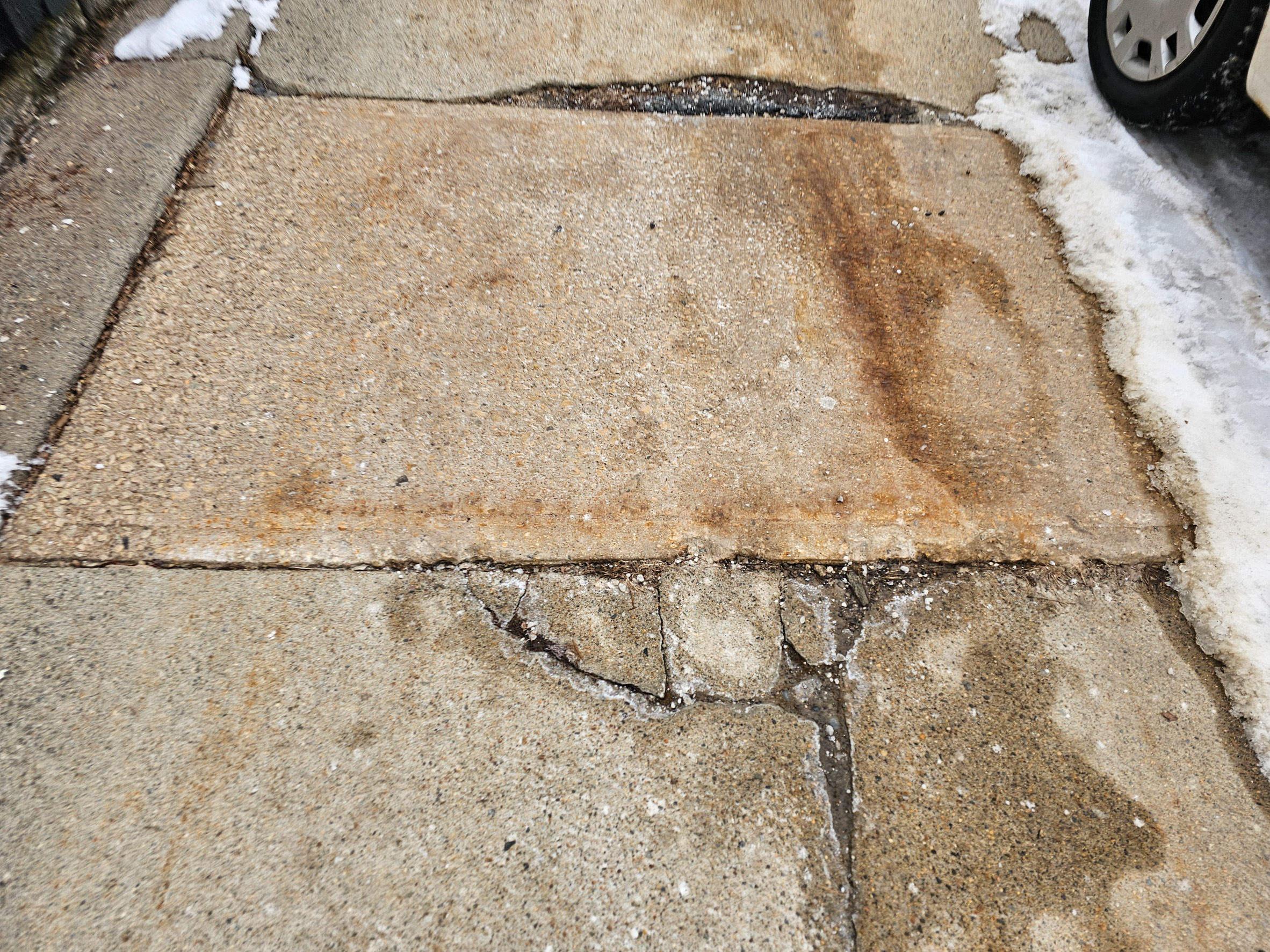
Concrete driveway cracks are one of the most common reasons homeowners start looking into concrete driveway repair. Not every crack means your driveway is failing, but not every crack should be ignored, either.

Hairline shrinkage cracks are usually cosmetic. These small cracks often form as concrete cures and ages. If they are narrow and there is no height difference between the two sides, sealing or filling them may be enough to keep moisture out and prevent further spreading.

Settlement cracks are more concerning. These often appear when the soil or base beneath the driveway shifts slightly. A cracked concrete driveway with one or two isolated settlement cracks may still be repairable if the base remains stable and the slab has not moved too much.

Wide structural cracks are a bigger warning sign. If cracks are growing, spreading in multiple directions, or wide enough to catch water and debris, a simple filler may not address the real issue. In many cases, these cracks suggest movement beneath the slab or deterioration that will continue.

Cracks with vertical displacement are the clearest sign that something more serious is going on. If one side of the crack sits higher than the other, that often points to base failure, soil movement, or frost-related shifting. In those cases, surface repair alone usually does not last.

Crack filling works best when the damage is minor, isolated, and not tied to deeper structural movement. If the cracking appears widespread or is paired with uneven sections, it may be time to look beyond patching and consider whether your driveway needs more extensive work.

Not sure whether those cracks are cosmetic or structural? A professional inspection can help you get a clear answer before you spend money on the wrong fix.

2. Spalling, Flaking, and Surface Damage

Spalling happens when the top layer of concrete begins to flake, chip, or peel away. You may also hear this referred to as scaling. It often starts as a rough or pitted surface and gradually worsens over time.

This kind of damage is especially common in climates with frequent freeze-thaw cycles. Water gets into the surface, freezes, expands, and weakens the concrete. Salt exposure can worsen the problem. Poor finishing during installation or an overly wet concrete mix can also leave the driveway more vulnerable to surface deterioration later.

Driveway spalling repair may be possible if the damage is shallow and limited to the top surface. In those cases, resurfacing can restore appearance and improve protection. This is where many homeowners start comparing driveway resurfacing vs replacement.

Resurfacing works best when the slab underneath is still sound. If the concrete surface is flaking but the driveway remains level, stable, and structurally intact, resurfacing may be a practical option.

However, if the spalling is deep, widespread, or paired with cracking and sinking, the problem is no longer just cosmetic. Once deterioration extends deeper into the slab, resurfacing will not solve the underlying weakness. Replacement may be the more dependable solution.

3. Sinking or Uneven Concrete Slabs

A sinking concrete driveway repair issue is often more urgent because it affects both safety and drainage. Uneven slabs can create trip hazards, collect water, and put more stress on surrounding sections of the driveway.

Several things can cause sinking. Poor sub-base compaction is a common issue, especially if the driveway was installed over unprepared soil. Erosion can also wash away support beneath the slab. Drainage issues may continue to allow water to seep under the concrete, gradually weakening the base. In some cases, tree roots can contribute to lifting or shifting sections.

When only one section has dropped, and the slab itself is still in decent condition, lifting methods may help. Mudjacking uses a slurry pumped beneath the slab to raise it back into place. Polyurethane foam lifting uses a lighter material that expands under the concrete.

These methods can work well in the right situation, but they are not always a permanent answer. If the soil below keeps washing out or the drainage problem remains uncorrected, the slab may settle again. When multiple sections are sinking, the base is unstable, or the concrete is badly cracked, full removal and replacement is often the better long-term fix.

When Concrete Driveway Repair Makes Sense

Some driveway problems really can be addressed without tearing everything out. Repair usually makes sense when the damage is limited, and the structure beneath the concrete remains solid.

Concrete driveway repair is often a good option when:

  • Damage is confined to one area rather than spreading across the entire driveway.
  • The sub-base is stable and shows no signs of widespread failure.
  • Slabs are still mostly level.
  • Cracks are about 1/4 to 1/2 inch wide and do not show significant movement.
  • Surface damage is shallow rather than deep.
  • Water is not consistently pooling due to the poor slope.


Depending on the issue, repair may include crack sealing, patching, resurfacing, or slab lifting. The right repair can extend your driveway’s life, improve its appearance, and give you more time before replacement becomes necessary.

For homeowners trying to stay on budget, that can be a very reasonable path, especially when the damage is caught early.

When Replacing Your Concrete Driveway Is Needed

There are also situations where continuing to repair a driveway stops being cost-effective. That does not mean every contractor should push replacement. It means that sometimes a full reset is the more practical financial decision.
Concrete driveway replacement is often the better choice when:

  • Cracking is widespread across the driveway.
  • Multiple sections are sinking or shifting.
  • The base beneath the driveway has failed.
  • Spalling is severe and extends beyond the surface.
  • Drainage design is contributing to recurring damage.
  • The driveway is 20+ years old and shows multiple problems.
  • Previous repairs keep failing.


This is where homeowners often ask when to replace concrete driveways rather than keep patching them. A good rule of thumb is to consider how often the problem recurs and whether repairs address the symptom rather than the cause.

A replacement may cost more upfront, but it can help you avoid ongoing repair bills, improve drainage, restore curb appeal, and deliver a longer-lasting result. In many cases, replacing a failing driveway once is more sensible than paying for repeated short-term fixes.

If your driveway has multiple issues at once, scheduling an inspection now can help you avoid putting money into repairs that will not hold up.

Repair vs. Replacement Costs: What Homeowners Should Consider

Cost is usually the biggest factor in this decision. In general, repair costs less up front than replacement. Crack filling, patching, resurfacing, and slab lifting all cost less than removing and pouring a brand-new driveway.

That said, the cheapest option today is not always the best value over time.

If the damage is minor and the repair addresses the actual problem, it is often the right financial choice. But if you are dealing with base failure, recurring settlement, or major surface breakdown, repeated repairs can add up quickly without giving you lasting results.

Replacement involves a higher upfront investment, but it may offer a better long-term return by addressing the root cause and extending the driveway’s lifespan. It can also improve the home’s appearance and reduce future maintenance headaches.

This is why repair vs replace driveway decisions should be based on condition, not just immediate price.

How a Professional Inspection Helps You Choose the Right Option

The best way to know whether you need concrete driveway repair or replacement is to have the driveway evaluated by an experienced contractor.

A professional inspection should include:

  • Checking the condition of the sub-base
  • Looking at slope and drainage patterns
  • Measuring crack width and movement
  • Inspecting for structural weakness and slab separation
  • Identifying whether damage is surface-level or deeper

An honest concrete contractor should not recommend a full replacement unless the driveway’s condition actually warrants it. In many cases, a targeted repair can still provide good value. In others, replacement is the more reliable path and the more responsible recommendation.

Not sure whether your driveway needs repair or full replacement? Schedule a professional inspection to get a clear answer based on the actual condition of your concrete.

FAQs About Concrete Driveway Repair and Replacement

Can large cracks in a driveway be repaired?
Sometimes, but it depends on the cause. If large cracks are isolated and the slab is still stable, repair may be possible. If the cracks are caused by movement, sinking, or base failure, replacement may be the better solution.

Is it cheaper to repair or replace a concrete driveway?
Repair is usually cheaper upfront. Replacement costs more initially, but it may save money over time if the driveway has widespread or recurring problems.

How long do driveway repairs last?
That depends on the type of repair and the condition of the driveway underneath. Minor repairs on a stable slab can last for years. Repairs made on a failing base or badly damaged surface usually do not last as long.

Does resurfacing fix deep cracks?
No. Resurfacing mainly addresses surface-level wear and cosmetic damage. It does not solve deep cracks, structural issues, or major slab movement.

Can you repair a sinking driveway?
In some cases, yes. Slab lifting methods such as mudjacking or polyurethane foam injection can help raise a sunken section. But if major base or drainage problems cause the sinking, replacement may be necessary.

Schedule A Concrete Driveway Inspection Today!

Driveway damage does not always require a full replacement. Some problems are easily repairable. Others require deeper solutions to prevent ongoing issues and unnecessary repair costs.

If you are dealing with cracks, flaking, sinking, or uneven concrete, the smartest next step is to have the driveway inspected by the professionals at Angelo Mancuso LLC. We can evaluate your driveway and provide the right recommendation, based on the condition of the slab, the base beneath it, and the long-term value of the solution. Contact us today to learn more!

Concrete is one of the most reliable materials for driveways, patios, walkways, and commercial surfaces. But like all building materials, it can develop cracks over time. Some minor cracking is natural, while other cracks result from installation mistakes, environmental stress, or improper maintenance.

At Angelo Mancuso LLC, we help Pittsburgh homeowners and business owners understand what causes concrete to crack — and how a professional concrete contractor can significantly reduce those risks. With proper planning, site preparation, and curing, you can expect strong and long-lasting results.

Understanding Why Concrete Cracks

Concrete is designed to handle heavy loads, weather variations, and years of use. Even so, it is not completely immune to cracking. As concrete dries, it naturally shrinks, which can lead to small surface cracks. These are often harmless.

Problems arise when cracks form because the mix was incorrect, the sub-base was unstable, or the concrete cured too quickly. External conditions — especially in Western Pennsylvania — also play a significant role. Understanding these factors is the first step in protecting your investment.

Common Causes of Concrete Cracking

Cracks rarely come from a single issue. Instead, they usually result from a combination of installation practices, environmental stress, and long-term material performance. Below are the most frequent causes we see in Pittsburgh.

Improper Mix Design

Concrete requires the right balance of water, cement, and aggregates.

  • Too much water weakens the mix and increases shrinkage.
  • Too little water prevents proper hydration, leading to a brittle surface.
  • Poorly graded aggregates or missing admixtures can also affect strength and durability.

Because each project is different, the mix must be adjusted based on thickness, expected load, and climate.

Poor Curing Practices

Curing ensures concrete gains strength at the correct rate. If concrete dries too quickly — often due to heat, low humidity, or wind — it may develop early cracks. Proper curing involves retaining moisture through the use of coverings, curing compounds, or controlled water application.

Environmental Conditions in Western PA

Pittsburgh’s climate adds stress to concrete surfaces:

  • Freeze-thaw cycles cause moisture in the concrete to expand and contract.
  • Sudden temperature swings can cause thermal cracking.
  • High humidity can interfere with the finishing and curing process.

These conditions make professional planning even more critical.

Structural and Load Issues

Concrete must be designed to handle the expected weight. Driveways that regularly support heavy trucks or commercial equipment require a stronger mix and a thicker slab. Soil movement, settling, or poor compaction beneath the slab can also create cracks, even when the slab itself was placed correctly.

Design and Placement Mistakes

Certain design elements help concrete manage natural shrinkage and movement. Cracks are more likely when:

  • Control joints are missing or spaced too far apart.
  • The slab is too thin for the intended load.
  • The sub-base is not compacted properly.
  • Reinforcement, such as wire mesh or rebar, is not placed correctly.

Each of these components plays a critical role in the long-term performance of a concrete surface.

Long-Term Chemical and Corrosion Factors

Over time, concrete can be affected by environmental chemicals and natural reactions:

  • De-icing salts, commonly used during Pittsburgh winters, can penetrate concrete and cause internal damage.
  • Reinforcing steel corrosion expands and cracks the surrounding concrete.
  • Alkali-silica reaction (ASR), although less common, can cause internal swelling and cracking if aggregates react with alkalis in the mix.

How Professional Concrete Installation Minimizes Cracking

Experienced concrete contractors understand how each step of the installation process influences long-term durability. At Angelo Mancuso LLC, we follow a proven approach that minimizes the risk of cracking and supports strong, uniform results.

Comprehensive Site Evaluation and Subgrade Preparation

Each project starts with assessing soil conditions, drainage patterns, and the required load capacity. A stable, compacted sub-base is essential because without it, the slab may shift and crack over time.

Proper Mix Ratios and Reinforcement

We ensure the water-cement ratio, aggregate blend, and admixtures match the project’s needs. Reinforcement materials such as rebar or wire mesh help distribute the loads and reduce stress on the slab.

Expert Placement of Control Joints

Control joints direct natural shrinkage into planned, controlled lines. When joints are spaced and placed properly, they significantly reduce the appearance of random cracks.

Correct Curing Methods for Pittsburgh’s Climate

Because Western PA weather changes quickly, curing is adjusted based on the season. This includes moisture-retaining coverings, curing compounds, or staged watering to help the concrete gain strength gradually and evenly.

Protective Sealants

Applying a high-quality sealer helps shield concrete from moisture, salt, and environmental wear. Sealants are especially beneficial for driveways, sidewalks, and other outdoor surfaces that are exposed to snow and de-icing products.


The Importance of Working with a Local Concrete Contractor

Choosing a Pittsburgh concrete contractor near you provides several advantages. Local contractors are familiar with:

  • Regional soil types and drainage challenges
  • Freeze-thaw cycles that affect slab design
  • Best seasonal timing for concrete driveway installation
  • Local building codes and industry standards

With this insight, homeowners and business owners can avoid common concrete installation issues and reduce long-term repair costs.

Looking for outdoor upgrades? Explore our concrete patio installation
services to see how we build durable and attractive patio surfaces that withstand Pittsburgh’s weather.

We also serve surrounding areas — learn more about working with a Concrete Contractor in Baldwin, PA.

Maintaining Your Concrete for Longevity

Even with the best installation, concrete benefits from regular maintenance. Simple steps can help extend its lifespan:

Routine Cleaning

Removing dirt, leaves, and chemicals prevents buildup that can cause surface wear and tear.

Sealing Every Few Years

A quality sealer protects against moisture intrusion, salt exposure, and staining.

Monitoring for Small Cracks

Small cracks can typically be repaired quickly and easily. Addressing them early helps prevent spreading.

Knowing When to Call for Repairs

If you notice uneven settling, large cracks, or surface scaling, it’s best to have a professional determine whether concrete repair or replacement is the most cost-effective solution.

For additional technical guidance, the American Concrete Institute (ACI) offers helpful resources on concrete design and curing methods.

Invest in Quality with Angelo Mancuso LLC

Whether you’re planning concrete driveway installation, a new patio, or a commercial surface, Angelo Mancuso LLC delivers results built on craftsmanship and long-term value. Our team combines technical knowledge, hands-on expertise, and a careful installation process to help Pittsburgh property owners protect their investment.

To schedule a site evaluation or request a quote, contact us today. We’re ready to help you build a concrete surface that performs reliably for years to come.